.jpg) |
|
|
||
www.Biotoxicity.com to learn more about this new exciting product launch. S9 Activation Enzymes S9 is a crude liver enzyme extract that can, under certain conditions, convert materials without any genotoxic activity to active genotoxic entities. The chemical process involved is probably different for different materials. In addition, the lifetime of the activated moieties is extremely variable: some may be extremely short-lived. This is the reason for incubating the S-9 with the bacteria and the tested material at the same time. |
||
Applications: Testing of pharmaceuticals for mutagenic activity. Testing of industrial effluents for presence of possible mutagenic compounds. Screening of municipal discharges for possible routine presence or spills of mutagenic compounds. Screening of surface and ground water for mutagenic residues. Screening of potable water supplies for the presence of chemicals with mutagenic potential. Screening of water soluble air pollutants for mutagenic agents. Evaluation of pure or complexed raw mixtures for potential mutagenicity. A convenient and easy to use teaching look for university and college laboratories. |
||

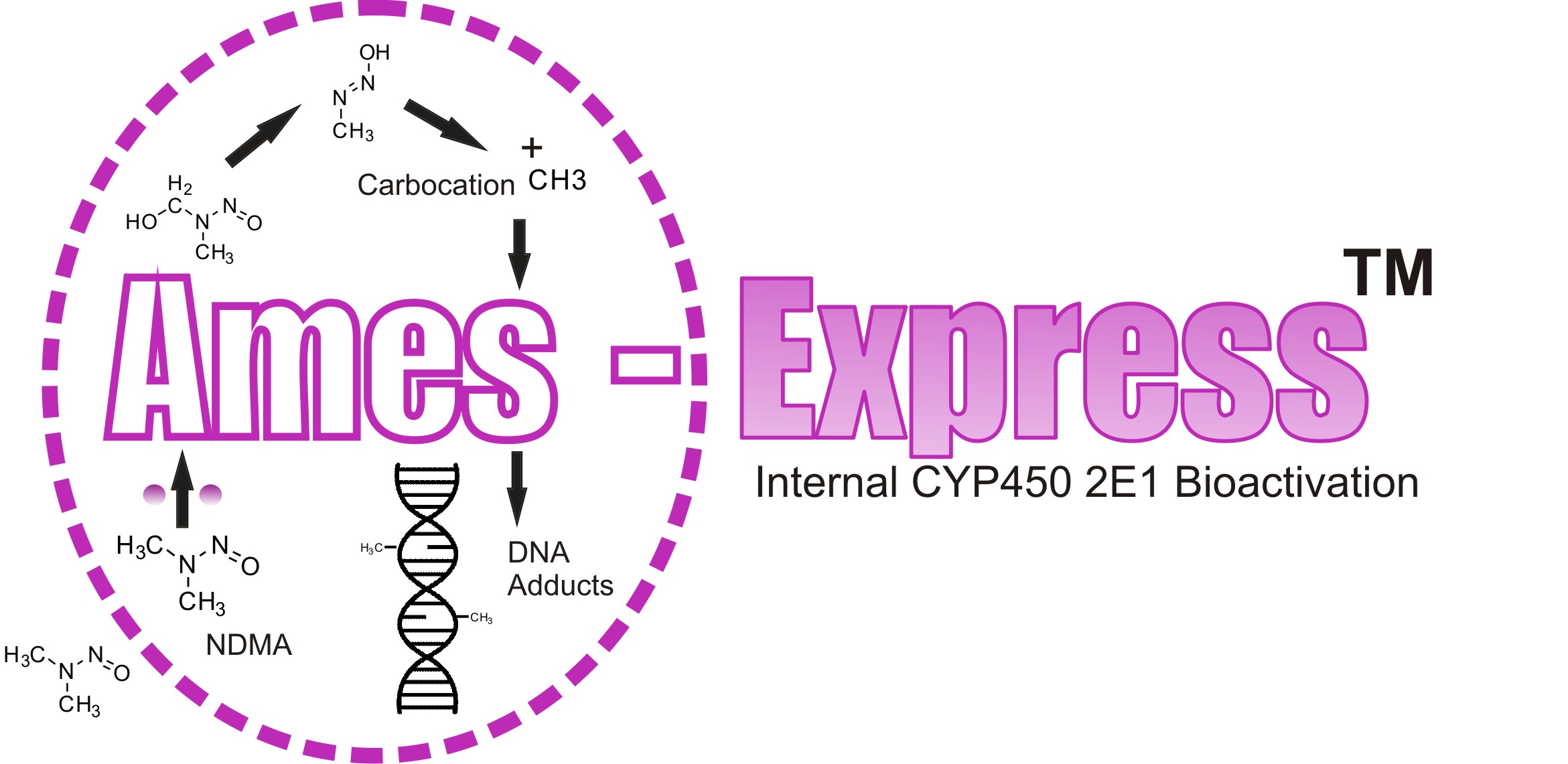 bacterial strains, called the Ames-ExpressTM strains. Ames-ExpressTM strains are constructed from normal Ames bacterial strains (TA100, TA98, TA1535, TA97a, TA1538), but have been engineered to also express either human P450 or GST-theta liver enzymes internally, which promotes bioactivation of xenobiotic molecules into DNA reactive species in the absence of an S9 mix.